

Saint-Sauveur cathedral
Historic site and monument Religious heritage Cathedral
Presentation
This building, built on the site of the ancient forum and, according to legend, on the foundations of an ancient temple dedicated to the god Apollo, gathers many architectural styles, due to the many alterations it has undergone over the centuries.
The origins of this church lie in both legend and history. Its location on the ancient Via Aurelia makes it a link, a bridge between the Roman world and the Christian world of Aix. Legend has it that the cathedral was built on the foundations of an ancient temple dedicated to the god Apollo.
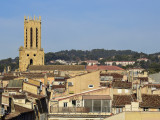
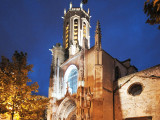
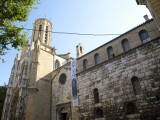
The cathedral’s construction evolved between the 5th and 18th centuries, a history that is immediately evident from its façade: on the right, to the south, the 12th-century Romanesque portal adjoins a Roman wall, whilst on the left, to the north, the vast, richly carved Gothic portal dating from the 15th and 16th centuries is surmounted at the top by an octagonal bell tower, erected between 1323 and 1425.
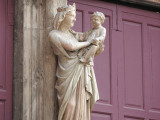
All the statues on the façade were destroyed during the Revolution and were not replaced until the 19th century. Only the Virgin on the trumeau and the Great Saint Michael remain in their original state. The cathedral’s doors have also survived. They were crafted by the Toulon-based sculptor Guirarmand between 1500 and 1508. The doors feature depictions of the four prophets of Israel: Isaiah, Jeremiah, Daniel and Ezekiel. They are accompanied by the twelve sibyls, prophetesses who foretold the coming of Christ.
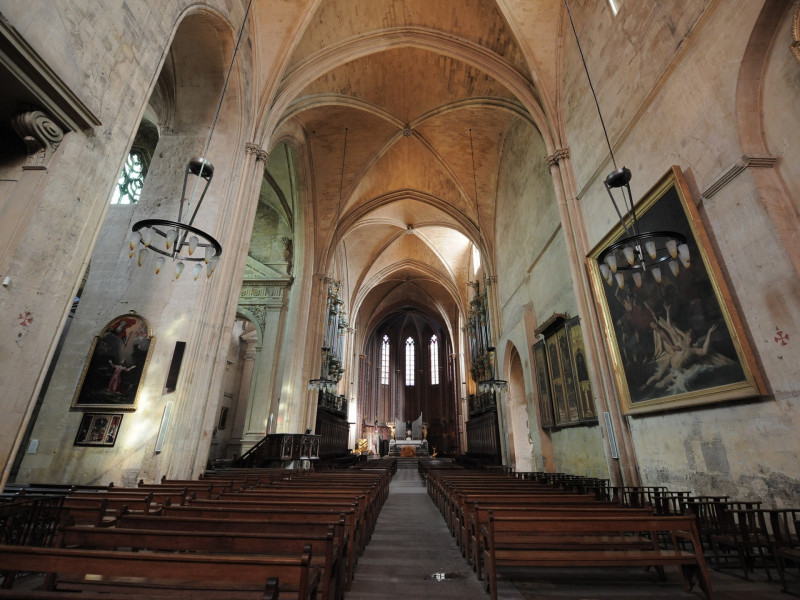
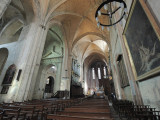
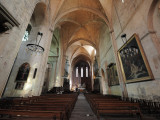
Inside, the cathedral comprises three naves in different styles: Romanesque, Gothic and Baroque.
The Romanesque nave features vaults adorned with a frieze modelled on ancient Greek and Roman designs, and its Corinthian capitals are characteristic of 12th-century Provençal architecture. Further along on the right are the stone sculpture museum and the entrance to the cloister. It flanks the baptistery, whose columns supporting its octagonal dome are said to have come from an ancient temple. Its central baptismal font recalls the ancient practice of baptism by immersion.
The Gothic nave is much higher than the Romanesque nave thanks to its ribbed vaulting. Above the nave doors is a large modern stained-glass window, replacing the one by Jean Joye, which was destroyed during the Revolution. Inside the nave are two 15th-century triptychs, 16th-century Flemish tapestries and two 18th-century organ cases.
The Baroque nave was built in the 17th century by Laurent and Jean Vallon. The chapel was moved northwards to make way for the new nave and to create a triumphal perspective, befitting the Baroque style. The nave features a stucco relief depicting the Assumption by Jacques Fossé.
The cloister was built at the end of the 12th century; it is small in size and exudes a sense of tranquillity.
Its timber-framed galleries feature rich and varied decoration, with pillars and capitals carved with human figures, animals, plants and mythical creatures.
The four Evangelists are depicted at the corners. The figures carved on the cloister’s capitals depict scenes from the Holy Scriptures.
The cloister was listed in 1875.
The basement preserves the paving and foundations of a large courtyard dating from the 1st century, which extends as far as the Place de l’Archevêché and was possibly the forum of the ancient Roman city.
The cathedral’s hidden treasures: it is in the Gothic nave that visitors can admire the ‘Burning Bush’ triptych, recognised as one of the most illustrious paintings of 15th-century Europe and the city of Aix’s masterpiece.
Originally commissioned for the Church of the Carmelites by King René, it was painted by Nicolas Froment around 1476. When closed, the triptych depicts the scene of the Annunciation. When opened, its panels show the donors in prayer. On the right is Jeanne de Laval; on the left, King René in a canon’s robe, surrounded by saints, including Mary Magdalene, patron saint of Provence. A profound meaning can be rediscovered through a symbolic interpretation rooted in the Bible.
The triptych underwent meticulous restoration in 2003 and can now once again be viewed in its entirety in the Saint-Lazare Chapel, according to a very specific opening schedule. The triptych is on display on certain days only. To ensure its preservation, the altarpiece is open at specific times of the year:
● from Easter Sunday to Whit Monday
● from 1 July to 8 September
● during European Heritage Days (the third weekend in September)
● from 1 October to 1 November
● from the first Sunday in Advent (late November/early December) to Epiphany
At all other times, the altarpiece is closed.
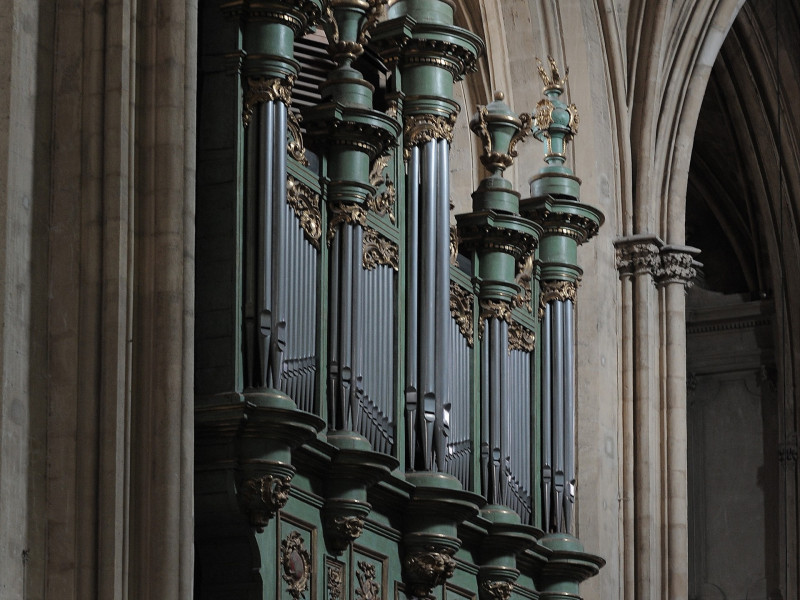
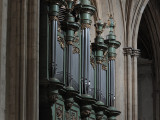
As for the organ, the green and gold case by J.E. Isnard, dating from 1745, and the instrumental section by M.H. de Ducroquet, dating from 1855, are both listed as historic monuments. This organ was restored by J. Dunand in 1972.
Saint-Sauveur Cathedral was listed as a Historic Monument in 1840. It is also the first cathedral in France to be ‘connected’, thanks to its interactive stones. Explore these historic surroundings using the ‘Connected Stones’ feature on the Aix Cathédrale Connect mobile app.
Visitors with reduced mobility who wish to visit the cathedral are asked to telephone the ‘Cathédrale vivante’ association on 04 42 23 47 40.
The cathedral’s construction evolved between the 5th and 18th centuries, a history that is immediately evident from its façade: on the right, to the south, the 12th-century Romanesque portal adjoins a Roman wall, whilst on the left, to the north, the vast, richly carved Gothic portal dating from the 15th and 16th centuries is surmounted at the top by an octagonal bell tower, erected between 1323 and 1425.
All the statues on the façade were destroyed during the Revolution and were not replaced until the 19th century. Only the Virgin on the trumeau and the Great Saint Michael remain in their original state. The cathedral’s doors have also survived. They were crafted by the Toulon-based sculptor Guirarmand between 1500 and 1508. The doors feature depictions of the four prophets of Israel: Isaiah, Jeremiah, Daniel and Ezekiel. They are accompanied by the twelve sibyls, prophetesses who foretold the coming of Christ.
Inside, the cathedral comprises three naves in different styles: Romanesque, Gothic and Baroque.
The Romanesque nave features vaults adorned with a frieze modelled on ancient Greek and Roman designs, and its Corinthian capitals are characteristic of 12th-century Provençal architecture. Further along on the right are the stone sculpture museum and the entrance to the cloister. It flanks the baptistery, whose columns supporting its octagonal dome are said to have come from an ancient temple. Its central baptismal font recalls the ancient practice of baptism by immersion.
The Gothic nave is much higher than the Romanesque nave thanks to its ribbed vaulting. Above the nave doors is a large modern stained-glass window, replacing the one by Jean Joye, which was destroyed during the Revolution. Inside the nave are two 15th-century triptychs, 16th-century Flemish tapestries and two 18th-century organ cases.
The Baroque nave was built in the 17th century by Laurent and Jean Vallon. The chapel was moved northwards to make way for the new nave and to create a triumphal perspective, befitting the Baroque style. The nave features a stucco relief depicting the Assumption by Jacques Fossé.
The cloister was built at the end of the 12th century; it is small in size and exudes a sense of tranquillity.
Its timber-framed galleries feature rich and varied decoration, with pillars and capitals carved with human figures, animals, plants and mythical creatures.
The four Evangelists are depicted at the corners. The figures carved on the cloister’s capitals depict scenes from the Holy Scriptures.
The cloister was listed in 1875.
The basement preserves the paving and foundations of a large courtyard dating from the 1st century, which extends as far as the Place de l’Archevêché and was possibly the forum of the ancient Roman city.
The cathedral’s hidden treasures: it is in the Gothic nave that visitors can admire the ‘Burning Bush’ triptych, recognised as one of the most illustrious paintings of 15th-century Europe and the city of Aix’s masterpiece.
Originally commissioned for the Church of the Carmelites by King René, it was painted by Nicolas Froment around 1476. When closed, the triptych depicts the scene of the Annunciation. When opened, its panels show the donors in prayer. On the right is Jeanne de Laval; on the left, King René in a canon’s robe, surrounded by saints, including Mary Magdalene, patron saint of Provence. A profound meaning can be rediscovered through a symbolic interpretation rooted in the Bible.
The triptych underwent meticulous restoration in 2003 and can now once again be viewed in its entirety in the Saint-Lazare Chapel, according to a very specific opening schedule. The triptych is on display on certain days only. To ensure its preservation, the altarpiece is open at specific times of the year:
● from Easter Sunday to Whit Monday
● from 1 July to 8 September
● during European Heritage Days (the third weekend in September)
● from 1 October to 1 November
● from the first Sunday in Advent (late November/early December) to Epiphany
At all other times, the altarpiece is closed.
As for the organ, the green and gold case by J.E. Isnard, dating from 1745, and the instrumental section by M.H. de Ducroquet, dating from 1855, are both listed as historic monuments. This organ was restored by J. Dunand in 1972.
Saint-Sauveur Cathedral was listed as a Historic Monument in 1840. It is also the first cathedral in France to be ‘connected’, thanks to its interactive stones. Explore these historic surroundings using the ‘Connected Stones’ feature on the Aix Cathédrale Connect mobile app.
Visitors with reduced mobility who wish to visit the cathedral are asked to telephone the ‘Cathédrale vivante’ association on 04 42 23 47 40.
Accessible for disabled
Opening period (s)All year round daily between 8.40 am and 6.30 pm.
Masses celebrated:
Monday to Friday, 8 a.m.
Saturday 8am and 6:30pm
Sunday, 10:30 am and 7 pm.
Masses celebrated:
Monday to Friday, 8 a.m.
Saturday 8am and 6:30pm
Sunday, 10:30 am and 7 pm.
Labels
- Vineyard :
- Vineyard
General information
- Parking :
- Parking nearby
- Client profile :
- Groups
- Environments :
- Town location
- In the old centre
- Visits :
- you can visit it
- Price :
- Free
- Style :
- Baroque
- Roman
- Gothic
- Information panel language(s) :
- Park :
- Park

Services, Tours, Activities and entertainment
- Entertainment :
- Temporary exhibition
- Concert
- Visit :
- Guided tours
- Shop :
- Shop
Contact
Saint-Sauveur cathedral
34 place des Martyrs de la Résistance
13100
Aix-en-Provence
Phone : +33 4 42 23 45 65
- Spoken language(s) :

Prices
Free of charge.

Destination
Cathédrale Saint-Sauveur
34 place des Martyrs de la Résistance
13100
Aix-en-Provence
GPS coordinates
Latitude : 43.532076
Longitude : 5.447424